
Bajaj Finserv, Infosys, Mahindra & Mahindra, Tech Mahindra, Hindustan Unilever, State Bank of India and HCL Technologies were the biggest gainers. On the contrary, Asian Paints, JSW Steel, NTPC and Adani Ports were among the laggards.

Follow this 15 x 15 x 15 rule to become a crorepati without taking big risks. Ramalingam Kalirajan explains how

Equity benchmarks snapped their six-session rally to close marginally lower on Thursday amid profit booking in banking and energy counters. Investors also stayed on the sidelines ahead of the RBI's policy meet outcome on Friday. In choppy trade, the 30-share BSE Sensex ended 51.73 points or 0.09 per cent lower at 58,298.80. During the day, it hit a low of 57,577.05 and a high of 58,712.66.

Asset-weighted returns of large cap funds lagged their benchmark by 273 basis points, ELSS funds by 318 bps and mid- and small-cap funds by 230 bps.

"Less than two week back, we faced a set of allegations from the US about compliance practices. This is not the first time we have faced such challenges. What I can tell you is that every attack makes us stronger," he said addressing the 51st Gems and Jewellery Award in Jaipur.

Among Sensex shares, Bajaj Finance, Mahindra & Mahindra, Sun Pharma, Nestle, NTPC, Power Grid, NTPC, UltraTech Cement and Larsen & Toubro were the biggest laggards. The prominent gainers were ITC, Tata Motors, Asian Paints and Titan.

The first quarter earnings season will dictate the trend in the equity markets in this holiday-shortened week amid absence of major macroeconomic drivers, say analysts. Besides, lacklustre global markets may increase volatility in the market, they added. Equity markets would remain closed on Wednesday for Bakri-Id.

Stock markets would take cues from the biggest event of the week -- the US Fed interest rate decision, besides tracking the trends in global markets and trading activity of foreign investors, analysts said. Last week, a heavy decline in smallcap, midcap firms, foreign fund outflows and elevated crude oil prices in the international market dented investors' sentiments. Experts said equity markets may remain volatile in the near-term amid a host of global central bank's monetary policy decisions lined up during the week.

The Indian equity markets will soon account for over a fifth of a key emerging market (EM) benchmark tracked by funds with assets exceeding $500 billion. This development is expected to funnel as much as $3 billion into the domestic markets. Following the latest review undertaken by global index provider MSCI, India's weighting in the MSCI EM index will surpass 20 per cent for the first time, narrowing its gap with the current top-weighted China to fewer than 400 basis points.

Equity investors suffered a massive loss of Rs 31 lakh crore on Tuesday as markets went into a tailspin with the BSE Sensex tumbling nearly 6 per cent as vote counting trends showed the BJP may not have a clear majority in the Lok Sabha polls. Erasing the record-rally of the previous trade, the 30-share BSE Sensex cracked 4,389.73 points or 5.74 per cent to settle at 72,079.05. During the day, the benchmark tanked 6,234.35 points or 8.15 per cent to hit a nearly five-month low of 70,234.43.

'The long-term impact of elections is minimal.'

The Budget proposals are expected to boost the fortunes of consumer goods and fast-moving consumer goods companies, which have been struggling with poor consumer demand for more than a year. The Budget announcements, such as the increase in standard deduction by Rs 25,000 for income-tax payers and slab revisions, will put more money in their hands, boosting consumer demand. Private consumption is also likely to benefit from a new scheme to offer internships to 10 million youths in the country's top 500 companies.

Equity markets may witness a gradual up-move this week with some volatility as both election and earnings season are nearing their end, analysts said, adding that global trends and trading activity of foreign investors would hold significance in dictating investors' sentiment. Benchmark indices, which had a record-breaking rally last week, would also track global oil benchmark Brent crude and the rupee-dollar trend. The monthly derivatives expiry on Thursday may also fuel volatility in markets.

'If their allocation to certain segments have become high due to strong returns over the past three-four years, they should rebalance their portfolios and bring them in line with their long-term asset allocation.'

The market capitalisation of BSE-listed firms reached an all-time high of Rs 288.50 lakh crore on Wednesday amid an ongoing rally in equities, as the benchmark Sensex settled above 63,000-level for the first time ever. The 30-share BSE barometer climbed 417.81 points or 0.67 per cent to settle at 63,099.65, its fresh record closing high. During the day, the benchmark jumped 621.17 points or 0.99 per cent to 63,303.01, its lifetime intra-day peak. Extending its winning momentum to seventh day, the Sensex has rallied 1,954.81 points or 3.19 per cent during this time.

Benchmark stock indices Sensex and Nifty rallied more than 1.6 per cent to close at lifetime high levels on Thursday following buying in banking, oil and auto shares and a record dividend payout by the RBI to the government. Regaining the 75,000 level after its best single-day gain since January 29, the 30-share BSE Sensex closed at all-time peak of 75,418.04, up by 1,196.98 points or 1.61 per cent over the last close.

Thanks to a booming market, India now has more than 300 family offices, up from 45 in 2018, according to a PwC report. The number is expected to grow rapidly, with promoters establishing more businesses in Tier-II and Tier-III cities. Family businesses play a crucial role in India's booming economy, spanning manufacturing, retail, real estate, healthcare, and finance.

Among the Sensex stocks, JSW Steel, Asian Paints, Maruti Suzuki India, NTPC, Adani Ports and Special Economic Zone, Bharti Airtel, ITC and Tech Mahindra were the major gainers. Reliance Industries, Tata Motors, Infosys, Mahindra and Mahindra, Bajaj Finance and Axis Bank were the laggards.

Close-ended equity funds, launched with fanfare three years ago, have disappointed investors with their dull returns. The data from Value Research shows 10 out of 17 close-ended schemes maturing before July have seen one-year returns between 34 and 40 per cent. In comparison, the Sensex Total Return Index (TRI) has rallied 46 per cent over the past one year.

'Retail investors, who had not seen such a massive correction in the SMID universe since COVID-19, are witnessing something like this for the first time. Panic profit booking may continue.'

From the Sensex pack, Tata Steel, Titan, Tech Mahindra, Wipro, Bajaj Finserv, Bajaj Finance, Nestle India, Tata Motors and JSW Steel were the biggest laggards. ICICI Bank, Axis Bank, HDFC Bank, State Bank of India and Kotak Mahindra Bank were the gainers.

From the Sensex pack, Larsen & Toubro, Bajaj Finserv, Mahindra & Mahindra, UltraTech Cement, State Bank of India, IndusInd Bank, Reliance Industries and Sun Pharma were among the biggest gainers. Bharti Airtel, Titan, ITC, Kotak Mahindra Bank, Tech Mahindra and HDFC Bank were among the laggards.

Equity benchmark indices rallied nearly 1 per cent to re-visit the 59,000-mark on Monday, tracking heavy buying in index heavyweights Reliance Industries and ICICI Bank. The BSE benchmark rose 442.65 points or 0.75 per cent to settle at 59,245.98. During the day, it jumped 504.92 points or 0.85 per cent to 59,308.25.

'Investors should not go for lump-sum investments in infrastructure funds at this point.' 'The SIP route is the best to avoid any major disappointment.'

Benchmark equity indices Sensex and Nifty ended lower on Monday after hitting their all-time high levels in early trade amid selling in blue-chip IT stocks and HDFC Bank. After breaching the 77,000-mark during the early trade, the 30-share BSE Sensex came under selling pressure at the fag-end of the session and ended 203.28 points or 0.27 per cent lower at 76,490.08. During the day, the benchmark jumped 385.68 points or 0.50 per cent to hit a new record of 77,079.04.

'For those seeking regular income, these funds provide a steady stream of income through dividends.'

From the Sensex firms, Power Grid, NTPC, Tech Mahindra, Bharti Airtel, Tata Motors, IndusInd Bank, Reliance Industries, Kotak Mahindra Bank and Maruti were among the laggards. Asian Paints, Wipro, JSW Steel, Hindustan Unilever, Bajaj Finserv and Mahindra & Mahindra were among the biggest gainers.

In a bull-case scenario it sees the Sensex at 61,000 levels, while it's bear case scenario pegs the Sensex at 41,000 levels by December 2021.

Ola Electric, the SoftBank-backed electric vehicle (EV) maker, is likely to pursue a valuation of approximately $4.5 billion in its upcoming initial public offering (IPO), marking about 18 per cent decrease from its last funding round valuation of around $5.5 billion, according to industry sources. The Bhavish Aggarwal-founded firm aims to file for the IPO by next month, according to people familiar with the matter. "The strategy is to price the IPO attractively for investors, fostering long-term growth and wealth creation," said a source.

We have millions of newbie investors who are clueless about how to handle sudden and severe adverse market reactions, which arrive from time to time, observes Debashis Basu.

Investors' wealth fell by Rs 2.39 lakh crore on Monday in line with a weak trend in the global equity markets. The BSE Sensex tanked 861.25 points or 1.46 per cent to settle at 57,972.62. During the day, it tumbled 1,466.4 points or 2.49 per cent to 57,367.47.
Investors' wealth on Thursday tumbled over Rs 2.81 lakh crore as stocks declined in line with selloff in global equities. The 30-share BSE benchmark index tanked 581.21 points or 1 per cent to settle at 57,276.94. During the day, it cracked 1,418.79 points to 56,439.36. In tandem with weak trend in equities, the market capitalisation of BSE-listed firms tanked Rs 2,81,147.38 crore to Rs 2,59,97,419.48 crore.
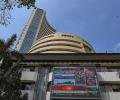
According to data from BSE, the 4,357 companies available for trade had a combined mcap of around Rs 416 trillion on Tuesday against India's GDP at current prices of Rs 296.6 trillion in FY24.

Benchmark BSE Sensex declined for the fourth day in a row on Wednesday due to selling in financial and banking shares and the government's move to hike securities transaction tax and short term capital gains tax. The 30-share BSE Sensex declined 280.16 points or 0.35 per cent to settle at 80,148.88 with 19 of its components closing lower and 11 with gains. During the day, it tumbled 678.53 points or 0.84 per cent to 79,750.51.
'Though one cannot paint the entire microcap basket with the same brush, investors need to be careful now as to what they're buying.'

On a five-day rolling basis, FPI selling is the highest in 24 years.

The Street will thus keep an eye on the operating profit margins over the next couple of quarters.
Among the Sensex firms, Bajaj Finserv, Tata Motors, Asian Paints, ITC, IndusInd Bank, State Bank of India, Tata Steel, Wipro, Infosys and Maruti were the major gainers. Tech Mahindra, HCL Technologies, Kotak Mahindra Bank, Titan and Larsen & Toubro were the major laggards.

India's financial sector is dominated by large government-owned and private-sector banks.
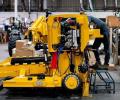
Indian engineering research and development (ER&D) players, such as Tata Technologies, Tata Elxsi, and Cyient, among others, had a subdued January-March quarter of 2023-24. The outlook for 2024-25 (FY25) also remains unexciting amid weak discretionary spending, prompting analysts to revise their growth expectations for the ongoing financial year (FY25).
 © 2026 Rediff.com - Advertise with us - Disclaimer - Privacy Policy - Sitemap - Feedback - About us - Terms of use - Grievances